Are electronic signatures legally binding? ESIGN and UETA in plain English
Yes, in almost every case. Here's what US law actually says about e-signatures, the few documents that still need ink, and what makes a signature hold up.
If you've ever sent a contract and wondered whether a typed name or a finger-drawn squiggle really counts, you're not alone. It's the most common question small businesses ask before they switch from paper.
The short answer: yes, electronic signatures are legally binding in the United States for the vast majority of business agreements. Two laws make that so, and a handful of exceptions are worth knowing.
This article is general information, not legal advice. If you're unsure about a specific document, ask a lawyer licensed in your state.
The two laws that make e-signatures valid
The ESIGN Act (federal)
The Electronic Signatures in Global and National Commerce Act, usually called the ESIGN Act, was signed into federal law in 2000. Its core rule is simple: a signature, contract or record can't be denied legal effect just because it's in electronic form.
In other words, if a contract would be valid on paper, it doesn't become invalid because it was signed on a screen.
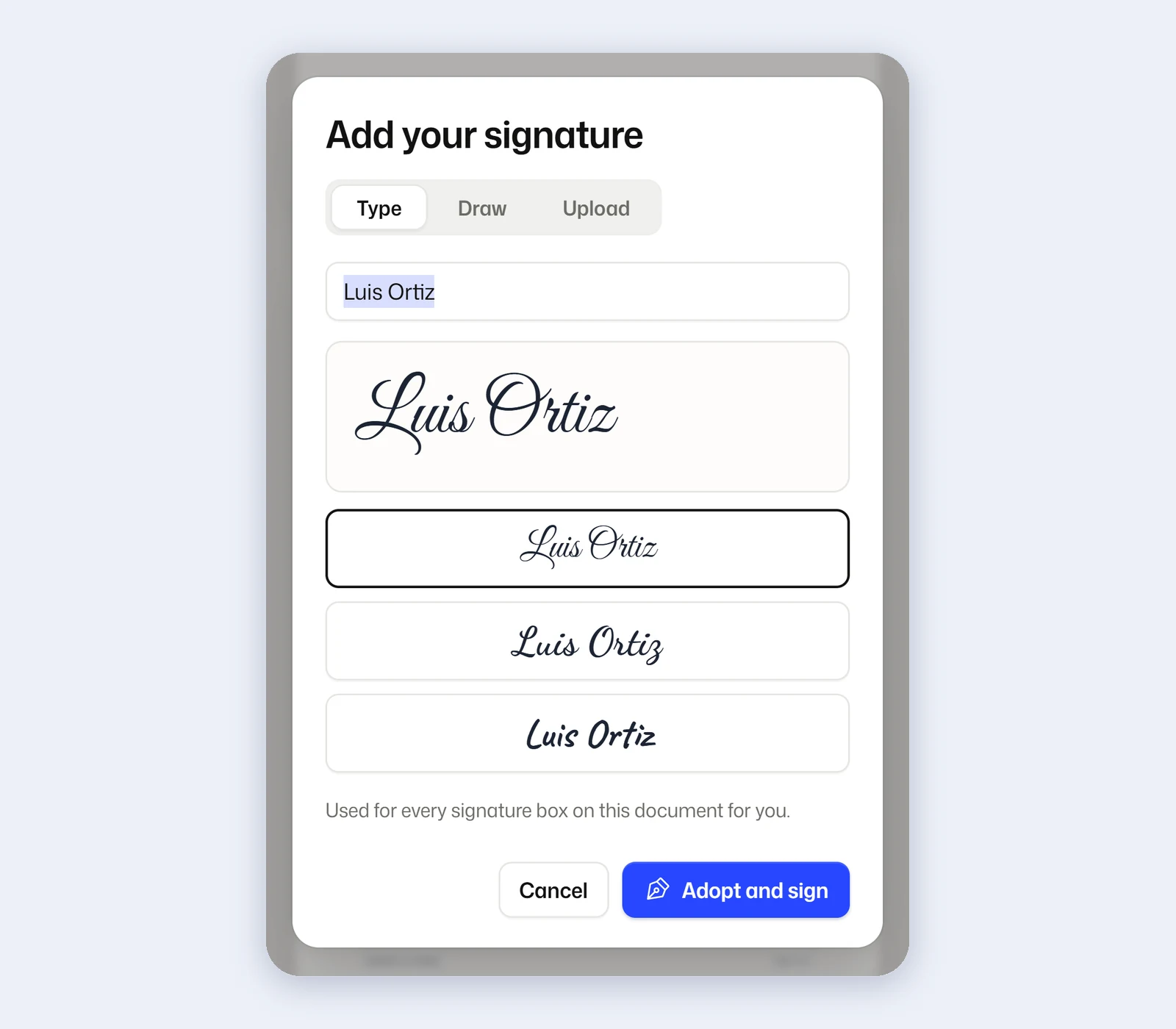
Typed, drawn or uploaded: what matters is the intent to sign, not the style of the signature.
UETA (state law)
The Uniform Electronic Transactions Act, or UETA, is a model law that 49 states, the District of Columbia and several US territories have adopted. It says much the same thing as ESIGN, but at the state level. New York is the one state that hasn't adopted UETA. It has its own law, the Electronic Signatures and Records Act, which also recognizes electronic signatures.
Between ESIGN and the state laws, an electronic signature is valid everywhere in the US.
What makes an electronic signature hold up
The law doesn't care whether someone typed their name, drew it with a finger or clicked a button. What matters is whether you can show the signature is genuine. Courts generally look for four things:
- Intent to sign. The person meant to sign. A clear "Sign" button and a final "Finish" step make that obvious.
- Consent to do business electronically. The signer agreed to use electronic records instead of paper. For consumers, ESIGN adds specific disclosure rules.
- The signature is tied to the document. You can show which signature went on which version of the document, and that nothing changed afterwards.
- A record you can keep and reproduce. Everyone involved can get a copy of the signed document later.
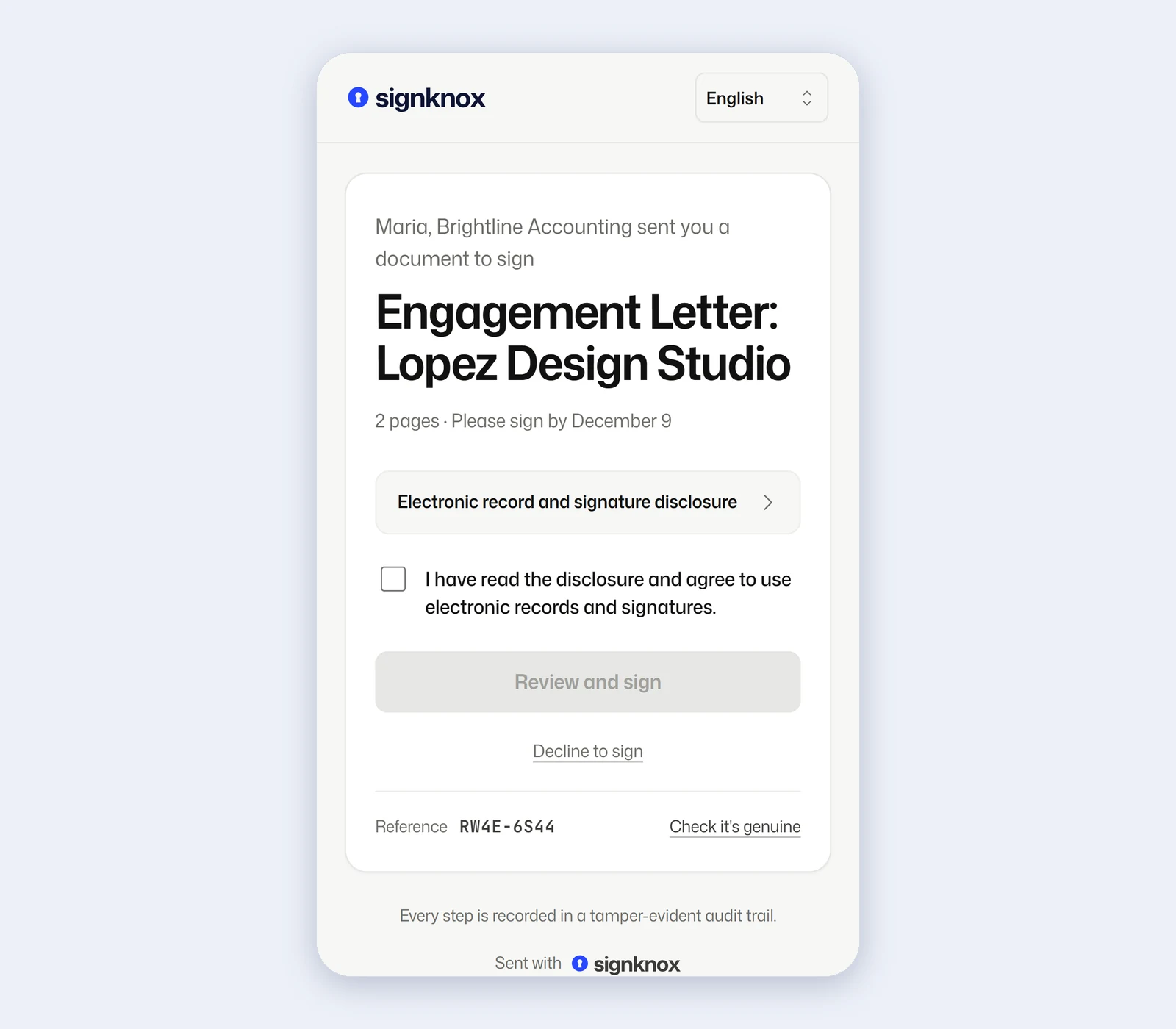
Consent comes first: before signing, the client agrees to use electronic records and signatures.
The weak point in most disputes isn't the law. It's evidence. "Did this person really sign it, and is this the same document they saw?" is the question you need to be able to answer.
The documents that still need ink
ESIGN and UETA leave out a short list of documents. The most common are:
- Wills, codicils and testamentary trusts
- Adoption, divorce and other family law matters
- Court orders, notices and official court documents
- Notices that utilities (water, heat, power) will be cut off
- Notices of default, foreclosure or eviction on a person's main home
- Notices cancelling health or life insurance
- Product recall notices that affect health or safety
Some states add their own exceptions, and some documents, like certain real estate deeds, may need a notary. If a document is on this list or needs notarizing, check the rules before you send it for e-signature.
What this means for everyday business documents
For the agreements most small firms send every week, electronic signatures are fully valid. That includes:
- Engagement letters and retainer agreements
- Client service contracts and statements of work
- Sales agreements and quotes
- Lease agreements and rental applications
- Employment offers, NDAs and contractor agreements
- Consent and authorization forms
How SignKnox helps your signatures hold up
Every document sent with SignKnox comes back with the evidence a signature needs:
- A clear consent step. Signers agree to sign electronically before they start.
- A tamper-evident record. Each step, from sending and opening to signing and finishing, is recorded with times and details.
- A sealed final PDF. Once everyone has signed, the document is sealed so any later change is detectable, and a Certificate of Completion is attached.
- Copies for everyone. Each signer receives the finished document, so the record can always be reproduced.
- Access codes when you need them. For sensitive documents you can require a code before the signer can open it.
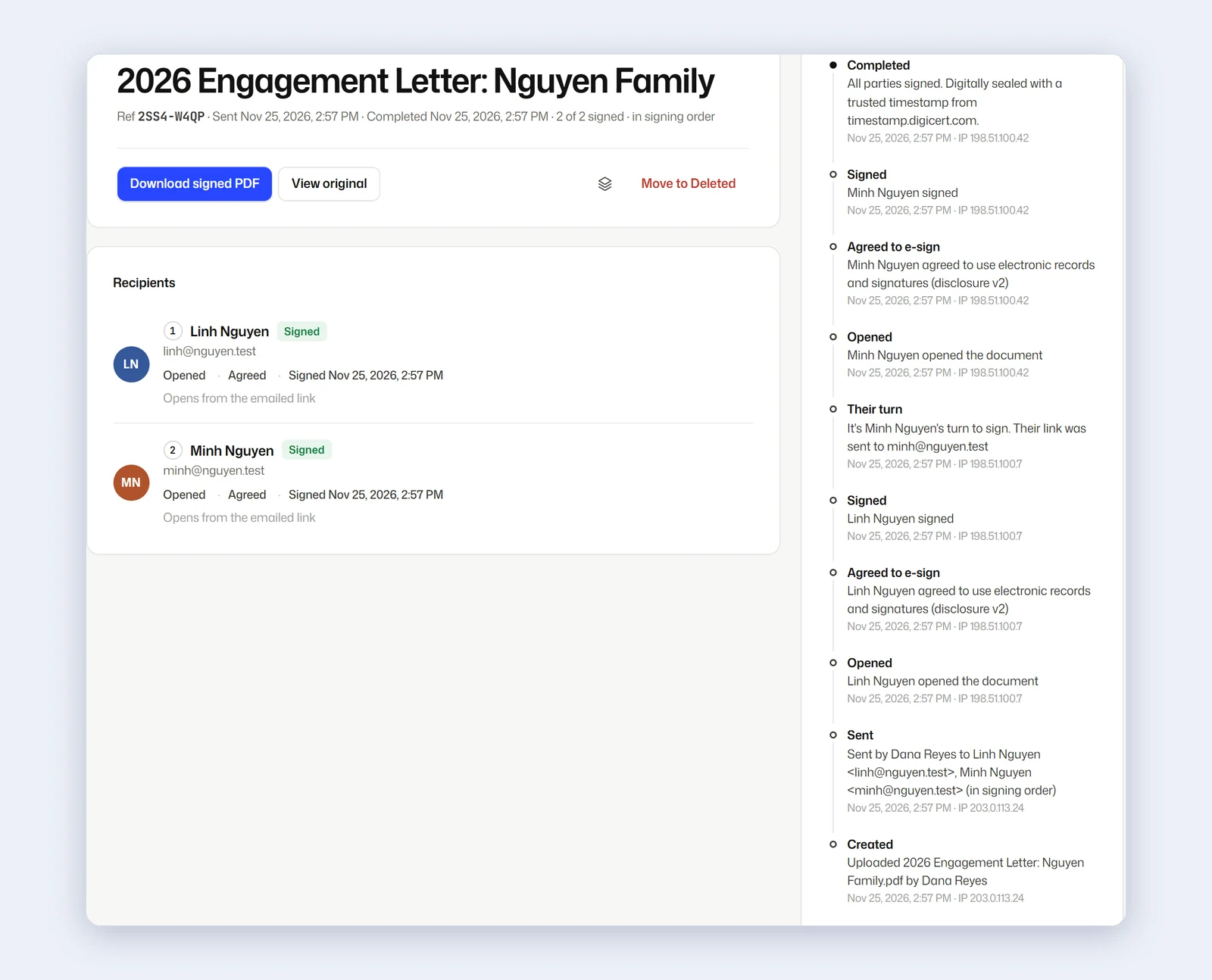
The record behind a finished document: who opened it, agreed and signed, when, and from where.
The bottom line
Electronic signatures are legal, widely accepted and, with a good audit trail, often easier to prove than a wet signature on paper. For the handful of documents that still need ink or a notary, check first. For everything else, you can stop printing.
Ready to send your next agreement? Start a free SignKnox trial and get it signed today.