Engagement letters for accountants and tax preparers: what to include
A clear engagement letter prevents scope creep, late payments and misunderstandings. Here's what to put in yours, and how to get it signed before the work starts.
An engagement letter is the agreement between your firm and your client about what you'll do, what you won't, and what it costs. It's easy to treat as paperwork. But when a client asks why their bookkeeping wasn't included, or questions an invoice, the engagement letter is what settles it.
Here's what a solid engagement letter for an accounting or tax practice usually covers, and how to make sure it's signed before any work begins.
This is general guidance, not legal or professional advice. Your professional body, insurer or lawyer may have specific requirements for your practice.
Why every client needs one, every year
- It sets the scope. Clients often assume "doing my taxes" includes everything from bookkeeping to answering a tax notice. A letter says exactly what's in and what's out.
- It protects you. If there's ever a dispute, a signed letter shows what was agreed. Many professional liability insurers expect one.
- It gets you paid. Fees, payment terms and what happens when invoices go unpaid are all agreed up front.
- It changes each year. Services and fees shift, so many firms send a new letter every year rather than relying on an old one.
What to include
1. Who the agreement is between
Name your firm and the client exactly as they should appear. For a business, use its legal name. For a couple filing jointly, include both people, and have both sign.
2. The services you'll provide
Be specific. "Preparation of your 2026 federal and state income tax returns" is better than "tax services". List each return, schedule or report included.
3. What's not included
This is the section that prevents most disputes. Common exclusions:
- Bookkeeping or cleaning up records
- Responding to tax notices or audits
- Tax planning or advice outside the returns being prepared
- Returns for other years, entities or family members
Say that anything outside the scope will be quoted separately.
4. The client's responsibilities
The client is responsible for the accuracy and completeness of the information they give you. Spell out what you need, such as income documents, receipts and prior returns, and by when.
5. Deadlines and timing
Give a date by which you need their documents to meet the filing deadline. State what happens if documents arrive late, for example that you may file an extension.
6. Fees and payment terms
Explain how you charge: a fixed fee, hourly rates or a mix. Include when payment is due, any retainer or deposit, and what happens if invoices aren't paid. Clear terms here save uncomfortable conversations later.
7. Records and confidentiality
Explain how long you keep records, how you protect client information and how you'll communicate securely. Mention that the client should keep their own copies too.
8. How the engagement ends
Cover how either side can end the engagement, what happens to work in progress, and how you'll hand back the client's documents.
9. Signatures
The client signs to accept the terms, and you countersign. Without a signature, it's just a letter.
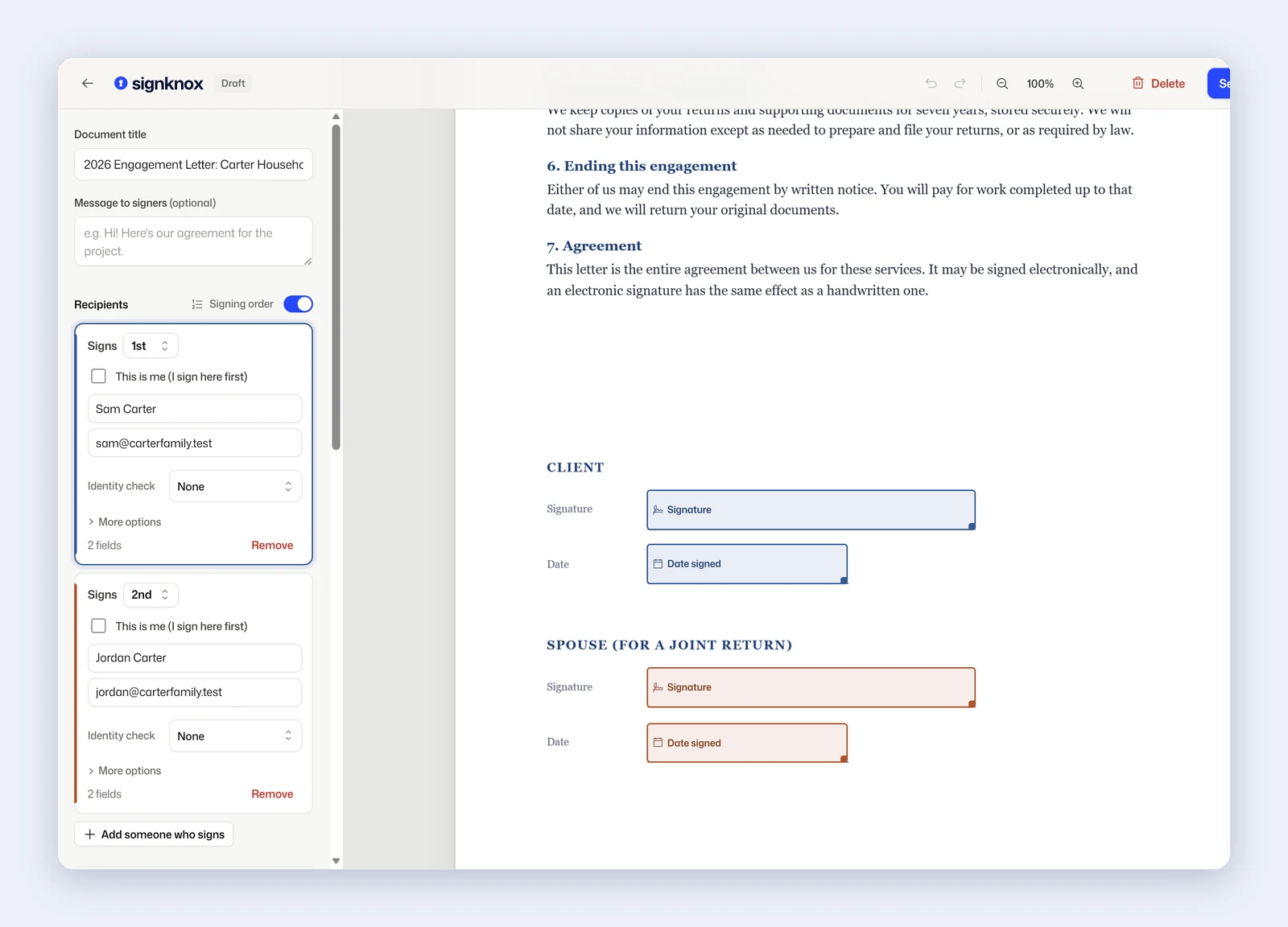
A joint return: both spouses get their own signature and date boxes, and sign one after the other.
Get it signed before you start
The best time to get an engagement letter signed is before you touch a single document. In practice that means sending it as soon as the client says yes, and making it as easy as possible to sign.
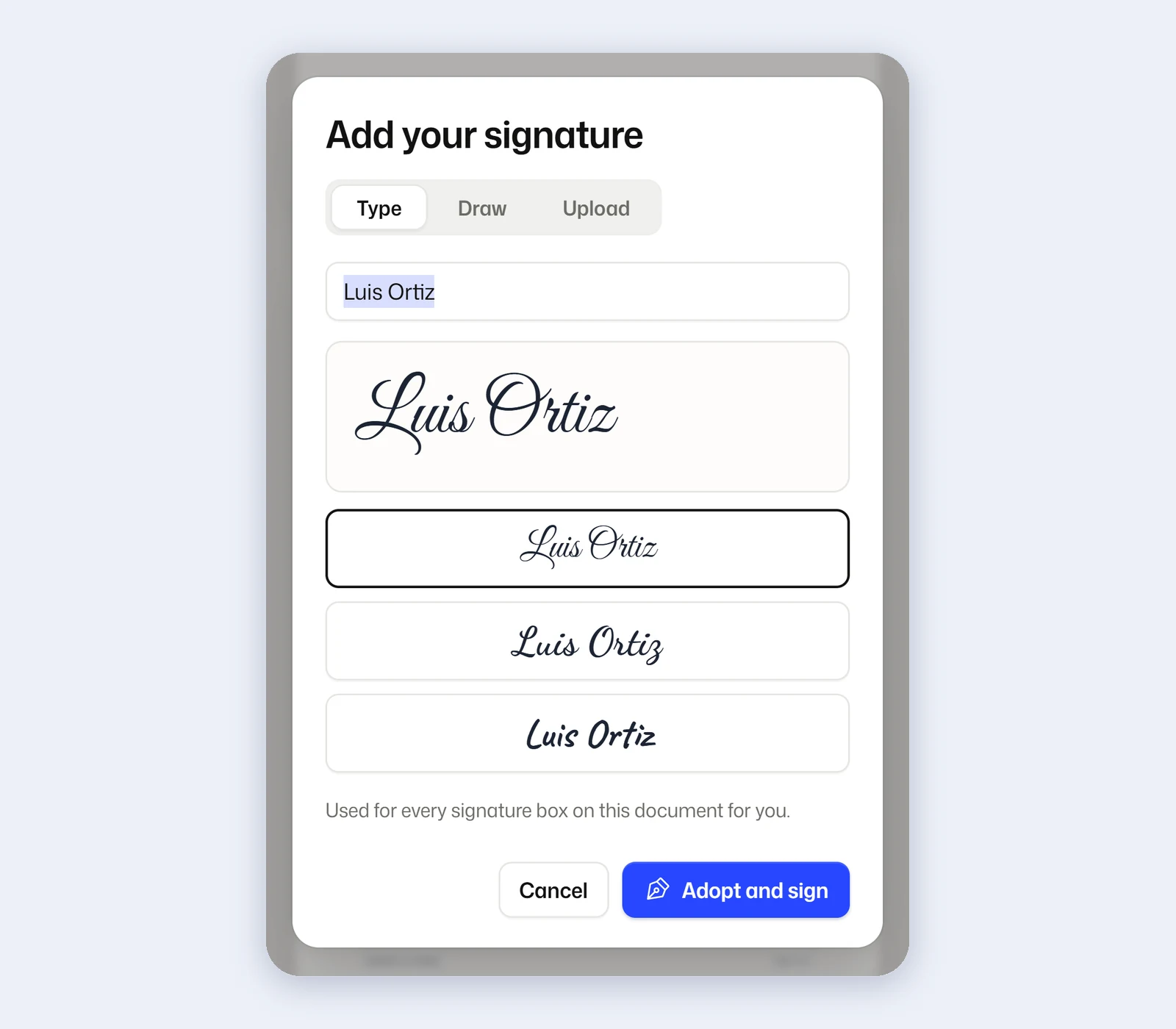
Signing on a phone takes seconds: type, draw or upload a signature.
A few things make it easier still:
- Use a template. Your letter is mostly the same each year. Save it as a template and change only the client details, services and fees.
- Send it electronically. Clients can sign on their phone in a couple of minutes, without printing or scanning. Electronic signatures are legally binding for engagement letters.
- Set the signing order. For a joint return, both spouses sign, then you countersign.
- Let reminders chase for you. Automatic reminders follow up so you don't have to.
- Take the retainer at signing. If you ask for a deposit, collect it in the same step. Clients are most ready to pay when they commit.
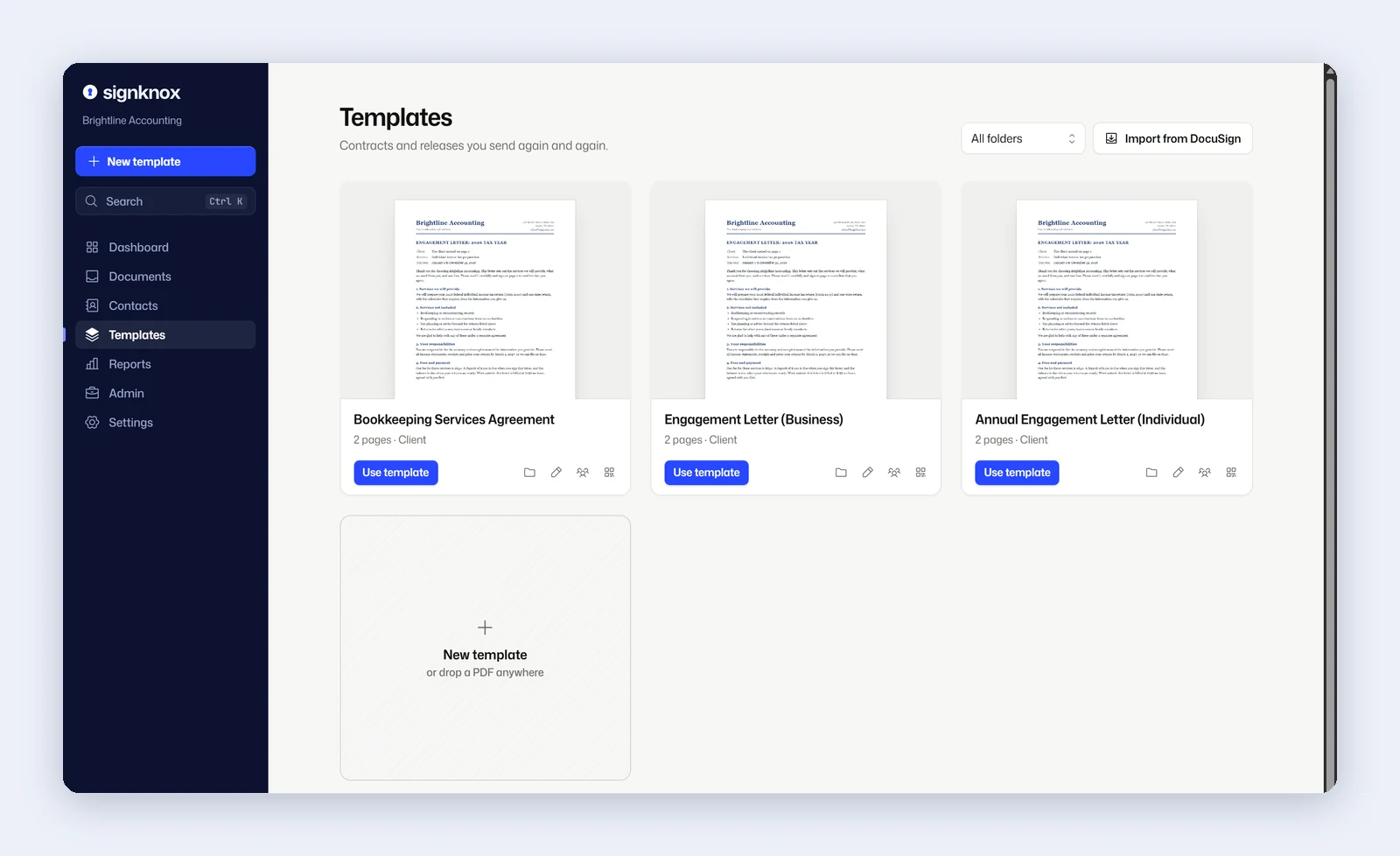
One template per kind of client, ready to send in seconds.
Make engagement letters part of your season
Send them early, before the busy season starts, so signed letters are in place when documents begin arriving. Firms that do this spend far less time chasing paperwork in March.
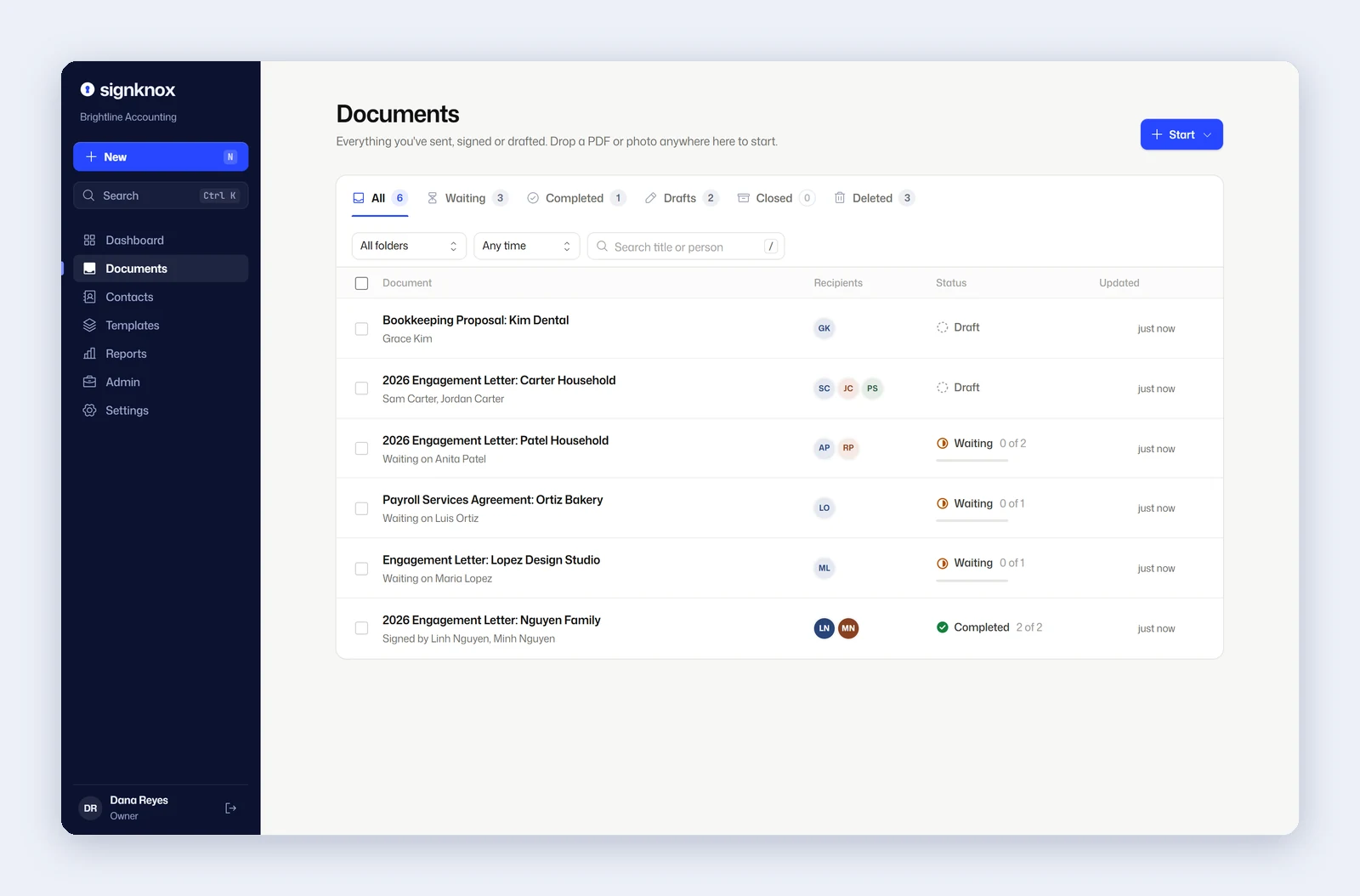
See at a glance who has signed and who you are still waiting on.
SignKnox is built for exactly this: templates for each kind of letter, signing on any device, deposits at signing, and a sealed copy with a full record for your files. See how it works for accounting firms or start a free trial.